Ever since the 1970’s, when folks like Jim Fix with his jogging book and of course fitness icon Richard Simmons began to get the world onto the fitness band wagon, a lot of information has come through our TV’s about how to lose weight and get healthy.
Unfortunately, much of it is inaccurate, misunderstood or even dangerous over time. The weight loss industry generates something over $70 billion in the U.S. alone… it’s big business and these companies and personalities know how to tap into our psyches and tickle those nerves that make us want to try their pills, foods, workouts and vibrating belts that melt the fat while you veg out in front of the tube.
Food has always been one of the areas that’s been capitalized in the last 40+ years of America’s and other nations’ weight loss craze. First it was reduced fat and fat free! Sounds great, right? Yeah, except that when they take the fat out of your favorite cookies, they simply replace it with more sugar… hmm, doesn’t sound so great, does it?
In the early 2000’s, if you recall, carbs became fitness public enemy #1. All of a sudden, people who a year before barely even knew what carbohydrates were began to go on no-carb diets. Then it was gluten. Again, before 2010 or so, most folks had never even heard of this thing… and now, it seems like every food has a gluten-free substitute and half of all living humans are allergic to it.
Weird, right?
But you know what one of the most attacked food items has always been, even before the 70’s – salt!
Yes, good old sodium chloride is the arbiter of all that’s evil in the world. Salt raises your cholesterol… oh, no that’s actually not true… salt is a key ingredient in weight gain… oh, that’s false too…
The truth is, in fact, that salt is absolutely vital to your body’s health. It’s needed in the bio-chemistry of your cells. Yet even more obvious is that when you cut salt out of your diet, you actually inhibit your body’s ability to digest food! And, of course, that means putting on more weight and also limiting the amount of nutrients you can absorb. Salt helps your body balance and optimize the pH level in your stomach. In other words, it helps make sure that your stomach acid is strong enough to break down the food you eat so that the nutrients in it can more effectively be absorbed as it passes through your digestive tract.
Salt is actually one incredibly important element in any good weight loss program. Like many people, I thought differently until running into a Korean medical student in Afghanistan who opened my eyes to a whole new – yet ironically ancient – way of looking at health, fitness and weight loss. He showed me the science behind what eastern cultures have known for millennia.
If you’re looking to lose weight, or if you’ve ever been frustrated by your lack of progress… some of the latest science may shock you as to why. There are myths about weight loss that we’ve been fed for far too long and yet the scientifically proven and tested truth has simply been lying in the grass waiting to be uncovered. To learn more about what does and does not work about weight loss and how you can truly drop unsightly pounds rapidly and permanently, click this link and check out a video I’ve put together. Learn how I nearly being killed in the Middle East led me to discover the amazing truth that you deserve to know – click here right now!
How your daily gut-busting routine may actually be preventing weight loss and pushing you closer to death In western cultures like ours, countries like the U.S., UK, Australia, Canada and other European nations, what’s the first thing that anybody thinks of or tells you whenever the idea of weight loss is brought up? You’ve got to hit the treadmill, exercise bike or the streets and burn those calories! On the surface of it, this makes sense, right? After all, you’re doing a lot of work and you’re sweating and breathing heavily. Surely, running a few miles every day must be dissolving those unsightly pounds like crazy, right? Would you be surprised to hear that this is actually wrong? No, I’m not crazy – let me lay it out for you… Yes, cardio does burn calories, it’s true. And yes, some cardio is good for you. Light cardio promotes a healthy heart and increases your endurance. On the other hand, though… heavy cardio actually begins to have the opposite effects.
Before I get into why, let me give you a simple but sensible example. Imagine pre-historic humans. These men and women are running around the Paleolithic world chasing down antelope, red deer, aurochs, bison and the occasional woolly mammoth. Most of their diet comes from animal protein and what edible plants they can scrounge.
Well, if cardio was so great for losing weight, these people would simply starve to death while running down their food. All that cardio would burn through their energy reserves faster than they could replace them. Yet they didn’t starve to death… why? For one thing, a lot of heavy cardio is hard on your knees and feet. Second, it’s also hard on the heart. Too much cardio actually begins to add scar tissue to your heart and increases your rate of heart attack. We didn’t realize that for a while until many scientific studies were done on the subject. As for losing weight, excessive cardio actually has the reverse effect and here’s why. Our bodies are genetically designed to survive. Our body’s job is to store energy as fuel both for its immediate use and in the form of fat for those times when food is scarce.
In modern times, of course, food isn’t really scarce, so this built-in safety feature is rarely needed. However, when you deprive your body of the nutrients it requires, either by starving yourself on some crazy diet or by over-taxing your body with lots of cardio, it begins to switch into survival mode. Additionally, and unfortunately with heavy cardio, your body also becomes anabolic. This means that it begins to burn the most effective source of energy first – and that’s not fat… it’s your muscle.
Take a good look at some of these chronic long-distance runners who compete. Many of them are kind of stringy looking and have to pack in the carbs just to maintain their muscle mass. You want your body to burn fat, not muscle, obviously. It’s not really about calories, as many diets and so-called fitness gurus try to make you believe.
Calories are only a means of measuring food energy. Yes, if you want to lose weight, you must take in less calories than you consume, yet there’s so much more to it than that. The biggest secret to weight loss isn’t running 10 miles every day, starving yourself or even avoiding some of your favorite carbs, believe it or not. In fact, if you’re going to lose weight properly, it’s actually important that you do eat some of your favorite foods! I know that sounds crazy, too – but it’s absolutely true, and I can prove it to you!
If you know how to use your body’s natural processes to your advantage, it’s entirely possible to lose more than 10 pounds in a single month without starvation diets, gut wrenching cardio, ridiculous workouts and eating anything gross! It’s true and I can show you the science to prove it! Want to know more about dropping some stubborn LB’s right away? Then click this link and I’ll show you a video that’ll explain how and show you the science backed by independent clinical studies to prove it.
Green tea has long been acknowledged for its health and wellness benefits, including weight loss assistance. The evidence is irrefutable. But are we overlooking something better?
It is true that green tea contains powerful antioxidants. These components contribute to minimizing health risks such as cancer and cardiovascular disease. As a Weight Loss Expert, it has been my primary goal to share practical tips and tricks for those pursuing optimal health. In upholding my obligation to transparency, I am about to reveal how green tea, although beneficial, is gradually losing value in the light of its delicious rival – rooibos. Rooibos, also known as red tea, is equally high in antioxidants, but is sourced from different substances to that of green tea.
The antioxidants contained in rooibos – aspalathin and nothofagin – are comparatively rare, and help to regulate blood sugar, reduce excessive fat production, lessen stress, and inhibit metabolic disorders. After the results of recent studies, alongside my own findings related to the major players in sustainable weight loss, I consider red tea an essential. In addition to preventing heart disease, diabetes, Alzheimer’s and more, it is an accessible and effective answer to weight gain. This year I began the production of my Red Tea Detox. A primary goal was to harness the incredible benefits of rooibos whilst combining the ingredient with a number of other, equally valuable elements. Rooibos means red bush. The plant is readily available, with leaves that turn red upon The Red Tea Detox Article 02 fermentation. With so much potential to assist with our health and wellness journey, I considered it wrong to ignore the strength of the plant. Unlike green tea, red tea does not contain caffeine, and therefore drinking the blend at night won’t leave you restless. Another factor of its ultimate superiority is simply – taste.
The bitterness of green tea is often attributed to its high tannin content, which is less prevalent in red tea. Many health products do not aim to bridge the gap between adults and young children, but the pursuit of health is of equal importance for both demographics. Which is why I’ve designed a recipe that caters to all ages and tastes, with the inclusion of a sweetened version of the recipe. This particular Red Tea Detox program is fresh and matchless, already actively transforming lives since its launch. Click here to check it out
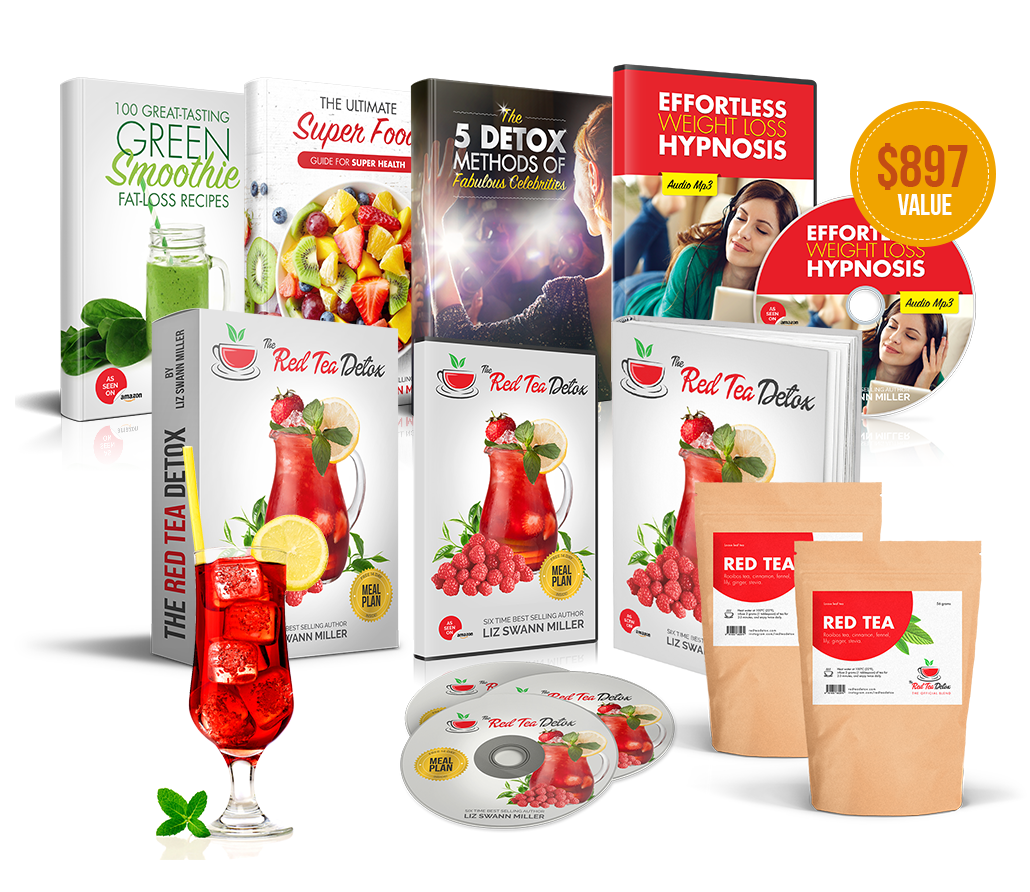
The Red Tea Detox is a brand-new cleansing program that detoxifies the body and sheds pounds quickly and safely. It allows almost anyone to lose 14lbs in just a matter of weeks.
Based on more than a decade of research spanning over 500 medical studies as well as almost three years of real-world testing, this program has the results – and the science – to back it up.
Liz Swann Miller, creator of The Red Tea Detox, is a six-time best-selling author with over 10 years of experience as a practicing Naturopath (ND).
She discovered the unique recipe for this energizing tea, the foundation of the program, during her travels deep into the heart of Africa. And best of all, the ingredients are so common they can be found in virtually any store.
Reproduced here for the first time in the Western world, The Red Tea Detox passes on the recipe for this incredible tea in the form of a fully digital product, making it available to customers instantaneously.
This comprehensive book is broken down into three different sections:
Diet: This portion of The Red Tea Detox outlines the importance of detoxifying the body before weight loss efforts, why toxins can hold your metabolism back, and the overall benefits of a red tea-cleansed system for both the body and mind. What’s more, it outlines in detail which energy-rich foods can help you burn fat faster than ever before.
Exercise: The exercise section is designed to complement the diet portion of The Red Tea Detox. It consists of a variety of supercharged exercises that will help melt body fat rapidly. Coupled with the metabolism-boosting diet, these quick and effective routines have the potential to almost double the weight loss results.
Willpower, Motivation, and Mindset: This third section delves into some of the most common myths about willpower and how truly understanding the underlying realities of motivation can revolutionize your weight loss – and your life. It’s a vital part of this program that has helped many to lose weight fast and keep it off for good.
These three elements combined create one of the most comprehensive and easy-to-use detoxification programs to date. People all over the world are already using it to lose weight quickly and easily while living a healthier and happier life along the way.
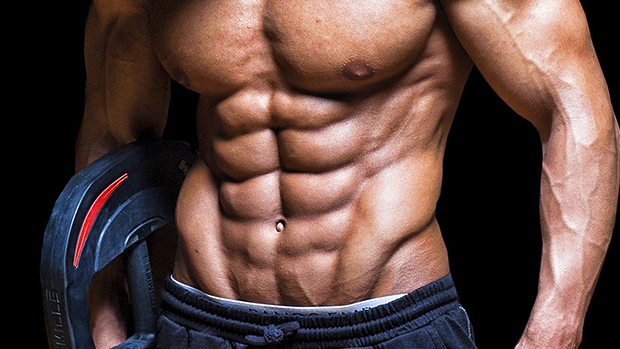
We all want better abs, right? So, what’s the most efficient way to get them? Instead of trying to crank out that fifth set of crunches, you’re going to combine your ab routines to do more work in less time.
It’s all about training efficiency: Burning that belly fat doing exercises that each recruit more midsection musculature (rectus abdominis, transverse abdominis, obliques), loading bodyweight exercises so you don’t need 60-rep sets, using dropsets or supersets to train in higher rep ranges, making less room for rest, and using exercises that don’t leave you standing in line to take your turn on a machine.
These 5 ab workouts are all about efficiency. The first workout is designed to build up your midsection “bricks” through lower reps. The next focuses on the upper RA (rectus abdominis) to build up your six-pack. The third works your lower RA, while the fourth is a bodyweight-rep circuit you can do anywhere. The last workout is designed for beginning trainees or people getting back in shape.
How to Build Ab Size And Separation
This workout uses lower reps with heavier loads to build up thickness in the bricks that make up your six-pack. This heavier workout creates greater structural damage to the muscle fibers, an important mechanism that promotes muscle hypertrophy.
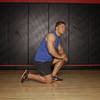
Barbell Rollout on knees
3 sets, Muscle failure (going as low as possible, rest 30 sec.)
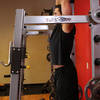
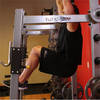
Density-Focused Superset Hanging Leg Raise
3 sets, Failure (adjusting difficulty so you reach failure at 8-12 reps, no rest)
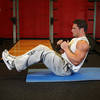
Oblique Crunches – On The Floor
3 sets, 20 reps per side (rest 30 sec.)
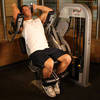
Density-Focused Superset Cable Crunch
3 sets, 10-12 reps (no rest)
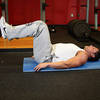
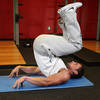
Reverse Crunch
3 sets, 20 reps (rest 30 sec.)
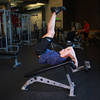
Plate Twist Perform on decline bench.
3 sets, 60 sec. work (rest 30 sec.)
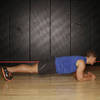
Plank
3 sets, 60 sec. work (rest 30 sec.)
Emphasis On The Upper Abs
Here’s a workout with more emphasis on the upper region of the rectus abdominis. A single antirotation movement breaks up this workout to help with your upper-ab recovery between movements.Emphasis On The Upper AbsPrint1
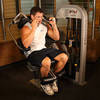
Ab Crunch Machine
3 sets, 12 reps (rest 30 sec., dropset on last set)
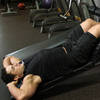
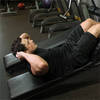
Triset Decline Crunch Weighted.
3 sets, 15 reps (no rest)
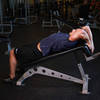
Decline Crunch Unweighted.
3 sets, Failure (no rest)
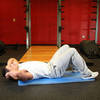
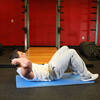
Crunches
3 sets, Failure (rest 45 sec.)
Pall of Press
3 sets, 15-20 reps per side (rest 30 sec.)
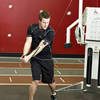
Superset Standing Rope Crunch
3 sets, 15 reps (no rest)
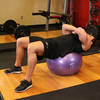
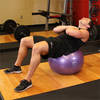
Exercise Ball Crunch
3 sets, Failure (rest 30 sec.)
Emphasis On The Lower Abs
This workout focuses on the lower abs. Notice that the movements are paired in supersets that enable you to extend your set, such as by using dropsets (performing a set to failure or just short of failure, then dropping some weight so you can do a few more reps). A single oblique movement breaks up the workout to provide a bit more intraworkout lower-ab recovery.Emphasis On The Lower Abs Superset Hanging Leg RaiseWith medicine ball.3 sets, Failure (no rest)
Hanging Leg Raise
3 sets, Failure (rest 45 sec.)
Superset Decline Reverse Crunch
3 sets, Failure (no rest)
Reverse Crunch
3 sets, Failure (rest 45 sec.)
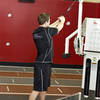
Standing Cable Wood Chop
3 sets, 15-20 reps per side (rest 30 sec.)
Superset Straight-Legged Hip Raise
3 sets, Failure (no rest)
Seated Leg Tucks
3 sets, Failure (rest 30 sec.)
Workout 4: Bodyweight Circuit For Endurance And Definition
Here’s one workout you can do anywhere. It’s circuit-based, so it will increase your metabolic stress, which is important for muscle protein synthesis and growth.
Your ultimate goal is to complete all nine exercises without stopping. It’s going to burn, so start with what you can handle, then add more reps each time you train.
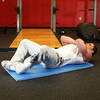
Complete up to 2 rounds, resting 90 seconds after each.Bodyweight Circuit For Endurance And DefinitionPrint1Circuit: Up to 2 rounds; rest 90 sec between rounds Jackknife Sit-Up
1 set, Failure
Bent-Knee Hip Raise
1 set, 20 reps
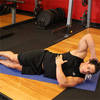
Oblique Crunches – On The Floor
1 set, 20 reps per side
Toe Touchers
1 set, 20 reps
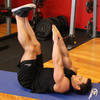
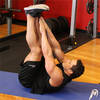
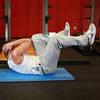
Reverse Crunch
1 set, 20 reps
Side Jackknife
1 set, 20 reps per side
Frog Sit-Ups
1 set, 20 reps
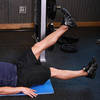
Alternate Heel Touchers
1 set, 20 reps per side
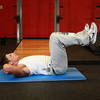
Air Bike
1 set, 30 sec.
Workout 5: Beginner’s Basics
This simplified workout focuses on basic movements that can form the foundation of your future ab work. As you build strength and endurance, move on to more challenging exercises with heavier loads, additional reps, or both.
One technique all these workouts have in common is the concept of density training. Instead of resting between sets, you make your workouts “dense” by switching between high-rep exercises that focus on different ab muscles so you can do more in less time.
In all of these workouts, start with the most difficult movement first, then progress to slightly easier ones as you fatigue. The workouts employ several rep ranges so you can work with different relative intensities.
For weighted exercises, choose a weight that gets you to muscle failure by the target rep listed. If the bodyweight movements in a workout are too easy or too difficult, adjust as necessary.For example, up the ante on your hanging leg raises by making sure your legs are absolutely straight. Or choose a substitute ab exercise from the extensive exercise library.
On low-rep sets, actively squeeze your abdominal muscles hard during the peak contraction of every rep. Use deliberate motion and focus on intense contraction, rather than trying to speed your way through the movement.
When doing supersets, don’t rest until you’ve completed both moves. You can also tweak the workouts to increase the muscle burn by adding dropsets, rest-pause, or partial reps—all of which allow you to extend a set past failure.
Do your workout three times a week with at least 48 hours between workouts. Continue for 4-6 weeks before making larger-scale changes in your training. Change up the workouts as needed to add variety.
Write down your workout notes (exercises, sets, reps, rest periods, weights) so you’ll know exactly what you did—and how to do better—on your next ab day.
Utilize “progressive overload” to increasingly make your workouts harder. Strive for an extra rep or two with each new set, add a plate to the stack on your next workout, or slightly reduce the rest period between sets. You’ll make faster and more impressive gains if you keep challenging yourself from one workout to the next.
Squats and deadlifts, especially completed without a weight belt, help you build a strong core. But stabilizing your torso for a squat (and to a lesser degree, deadlifts) is a more-or-less isometric contraction that works the transverse abdominis (TVA) but not so much the rectus abdominis (the six-pack muscle).
With squats and deadlifts (in addition to planks), there’s very limited actual shortening or lengthening of the RA’s muscle fibers, because your torso is fairly rigid and upright. Complement heavy, full-body lifts with dedicated abdominal exercises that work through an active, full range of motion.
More About Your Rectus Abdominis
The rectus abdominis is a single muscle that runs from your pelvic bone to your sternum. When you stabilize your legs (as in kneeling cable rope crunches), the upper portion of the RA (the upper abs) undergoes a greater degree of shortening than the lower portion. When you stabilize your upper body (as in hanging knee raises), your lower abs do the shortening. You can emphasize one region of the abs over another, like you do with chest training, but you can never completely isolate those regions. That’s why exercises are considered either upper ab or lower ab.
More About Your Obliques
Besides assisting in trunk flexion, the internal and external obliques are called into play during twisting or rotational movements. Some exercises can work multiple areas in the same movement, depending on whether your upper or lower body is stabilized. A crunch with a cross-over, for example, can target both the upper abs and obliques.
Now that you know how to get better abs, Are you ready to try the most savage strength training system on the planet? CLICK HERE- NOW!
How about a more intense abs workout?
Specforce Abs this is the most scientifically researched and well periodized core strength and stability program on the planet. No matter your current level of development you will amaze yourself with the feats of abdominal strength and skill you will master by simply following the simple progressions in program. And the fringe benefit will be a flat belly and even ripped six pack abs.






















 Gforcefitness